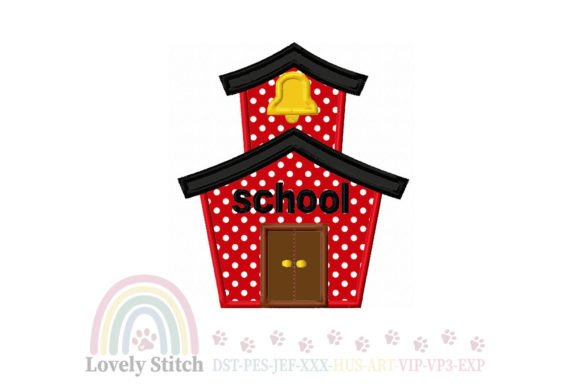
School House Design Review for Business Merch
As an experienced embroidery designer, I approach every new machine embroidery design with a critical eye toward commercial viability. When evaluating the School House design for small business merchandise and branded patch use, my primary focus is not just on its nostalgic charm, but on how it translates from screen to fabric in a production environment. This review assesses the digitizing quality, versatility across different substrates, and overall suitability for professional branding applications.
Visual Personality and Brand Alignment
The first impression of School House is undeniably warm and inviting. It projects a sense of heritage, community, and established trust. For a small business, this visual language is powerful. Unlike trendy or abstract graphics, a classic one-room schoolhouse evokes feelings of reliability and foundational values. In my assessment, this design feels handcrafted yet structured, striking a balance that is essential for brand identity.
For businesses like local bakeries, florists, pet brands, or creative studios, this aesthetic aligns perfectly with a "maker" ethos. It suggests that the business values tradition and care. However, as a designer, I must ensure this nostalgia does not read as outdated. The digitizing style determines whether the final finished product looks like a premium boutique item or a dated craft project. Based on the description of meticulous digitization, the expectation is clean satin stitches and well-defined fill patterns that maintain a modern, crisp appearance despite the vintage subject matter.
Real-World Applications for Small Business Merch
Versatility is the hallmark of a profitable embroidery file. A design that only works on one type of garment limits your return on investment. Here is how I evaluate School House across common commercial applications:
- Embroidered Patches: This is perhaps the strongest use case for this design. The architectural lines of a schoolhouse lend themselves beautifully to patch borders. As a standalone embroidered patch, it can serve as a collectible add-on for customers or a uniform identifier for staff. The key here is ensuring the border stitch is dense enough to prevent fraying during cutting.
- Apron Embroidery: For cafés and bakeries, aprons are prime real estate. School House placed on the chest pocket area creates an immediate connection between the brand’s story and the service provider. The verticality of the building structure fits well within the rectangular constraints of an apron bib without distorting.
- Tote Bag Design: Canvas totes offer a stable base for detailed work. Because tote bags often have a rougher fabric texture, the design needs sufficient underlay to prevent sinking. If digitized correctly, this design will pop against natural canvas, making it ideal for farmers' markets or retail packaging.
- Cap Embroidery: This requires caution. Caps present a curved, structured surface that can distort tall vertical elements. If using School House for cap embroidery, I would recommend testing a resized version specifically optimized for headwear to ensure the roofline remains straight and the lettering (if any) stays legible.
Technical Considerations and Production Safety
While the aesthetic is charming, the technical execution dictates success in commercial embroidery. There are specific areas where this design requires careful handling to avoid production failures or poor-quality output.
Managing Stitch Density and Fabric Texture
Architectural designs often involve overlapping fills and outline stitches. High stitch density can cause puckering on lightweight fabrics or needle breaks on heavy denim. Before running a full production batch, you must verify the density settings. If the School House design is too dense for your target custom apparel, you may need to adjust the pull compensation or reduce the fill density slightly. Conversely, on textured fabrics like terry cloth or fleece, inadequate density will result in the design getting lost in the pile. Always match your stabilizer choice to both the design complexity and the garment weight.
Sizing and Legibility Challenges
Nostalgic designs often include small details like window panes, door knobs, or shingles. These elements are vulnerable when scaling down. If you intend to use School House as a small sleeve logo or a subtle tag accent, inspect the minimum viable size. Tiny lettering or gaps less than 1mm may disappear or cause thread jams. I advise against reducing this design below its recommended minimum dimensions without first simplifying the artwork. For small business merch that requires frequent washing, such as staff uniforms, durability is paramount. Ensure all internal details are anchored securely so they do not unravel over time.
Impact on Customer Perception and Value
Why choose this specific imagery? In the crowded marketplace of Etsy sellers and handmade brands, visual consistency builds recognition. School House acts as an anchor for your visual narrative. When customers see this motif repeated across your design assets—from packaging to apparel—it reinforces a cohesive brand experience.
Furthermore, high-quality embroidery signals professionalism. A poorly executed design screams "amateur," regardless of how good the actual product is. By selecting a meticulously digitized file, you protect your reputation. The tactile nature of embroidery adds perceived value to a handmade product. A plain canvas tote might sell for $15, but one featuring a crisp, well-executed School House emblem can command a premium price because it feels curated and intentional.
Designer Notes: Pre-Production Checklist
Before you hoop your first shirt or cut your first patch, follow this professional workflow to ensure the School House design meets your business standards:
- Verify File Specifications: Since exact stitch counts, formats, and license terms are not universally standardized, always check the specific metadata included with your purchase. Confirm the hoop size compatibility with your machine before starting.
- Create a Printable Mockup: Use software to generate a printable mockup at actual size. Print it out and hold it against the intended garment. This helps visualize scale and placement better than a screen view ever can.
- Test Thread Colors: Monitor colors differ from thread sheens. Run a test sew-out using your actual thread colors to ensure contrast levels are sufficient. Dark outlines on dark fabric may need a lighter highlight stitch to remain visible.
- Conduct a Wash Test: If this is for uniforms or items requiring frequent laundering, wash and dry your test sample three times. Inspect for loose threads, shrinkage distortion, or stabilizer residue.
- Check Commercial Licensing: Never assume usage rights. Review the license agreement to confirm you can use this digital embroidery file for selling physical goods. Protecting your business legally is as important as protecting your stitch quality.
- Evaluate Beside Other Assets: Place the stitched sample next to your existing branding materials. Does the style match? Is the color palette consistent? Visual harmony across all touchpoints strengthens customer engagement.
Final Verdict for Business Use
The School House embroidery design offers significant potential for small businesses seeking to evoke warmth, tradition, and community. Its strength lies in its ability to function as both a decorative element and a brand symbol. Whether applied to apron embroidery for a bakery or as a signature mark on boutique packaging, it carries an emotional weight that generic logos lack.
However, success depends entirely on technical diligence. Treat this design as a production asset, not just a pretty picture. Respect the limitations of curved surfaces, validate the sizing for your specific application, and always test on the actual substrate. By combining the nostalgic appeal of the School House with rigorous production standards, you create merchandise that resonates emotionally while performing flawlessly in the real world. For back-to-school promotions or year-round heritage branding, this design is a worthy addition to your commercial library when executed with professional care.